The Caño Limón Area includes world class oil reservoirs with average formation depth of 7,450 ft, average porosity of 28%, average permeability of 50 mD–6,000 mD, and recovery factors that range between 30% to 70%.
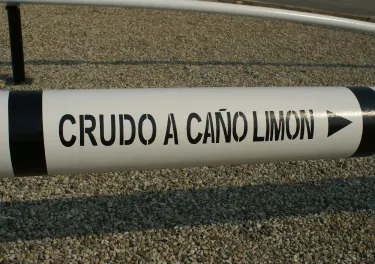
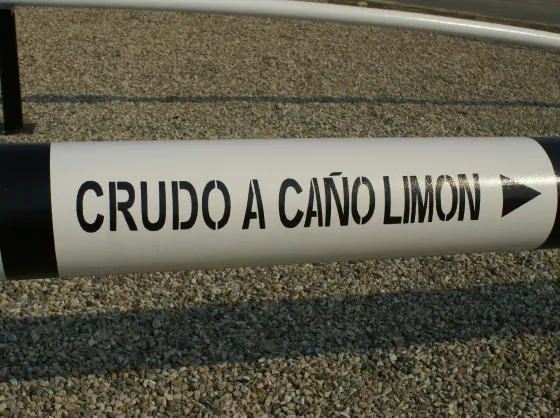
Oil is evacuated via the Caño Limón–Coveñas and the Bicentenario pipelines, operated by CENIT, Ecopetrol’s midstream subsidiary. SierraCol Energy has strategic spare storage capacity in the event of outages.
The Caño Limón Area
assets have three major
production facilities and over 430 active wells.
The Caño Limón Area
assets have three major
production facilities and over 430 active wells.
Caño Limón Area
Caño Limón is a world-class reservoir that regained Colombia its status as a net oil exporter.
We operate the Cravo Norte, Rondón, Chipirón and Cosecha contracts. These fields have a cumulative
historical production over 1.5 billion barrels.
We are also partners with Ecopetrol in the exploration blocks Llanos 39 and Llanos 52.
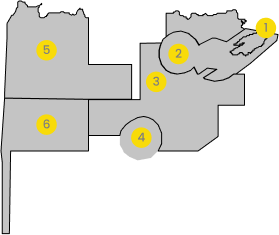
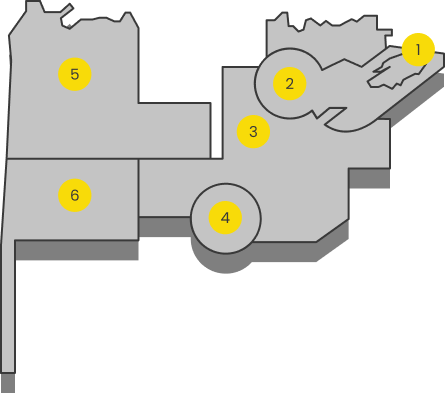
Production
Exploration
Blocks :
1. Cravo Norte
2. Chipirón
3. Cosecha
4. Rondón
5. Llanos 39
6. Llanos 52

Cravo Norte
The Cravo Norte Association contract covers 9,700 commercial acres and it is one of the largest blocks in the Llanos basin.
The block includes seven fields; the Caño Limón Field was discovered in 1983 by the Caño Limón 1 well, which flowed at a rate of over 10 mbod.
The discovery of the Caño Limón oil field enabled Colombia to regain its status as a net oil exporter country.
The Cravo Norte contract is located in the northern portion of the Llanos basin. Overall, the field is a large ellipsoidal feature influenced by the Arauca Arch, but can be further divided into several separate fault blocks controlled by major strike slip faults, each with separate oil-water contacts.
The structure is controlled by three main strike slip faults: the Caño Limón, La Yuca and Matanegra faults. These faults separate the contractual areas into distinct structures. The reservoirs are Cretaceous to Oligocene aged sandstones deposited in an overall regressive system, grading from shallow marine, through deltaic up to fluvial environments of deposition.
Cravo Norte
Partners
SierraCol Energy, Ecopetrol
Contract signed
07 / 1980
First oil
10 / 1983
OOIP
2,060 mmboe
RF%
~60
Chipirón
The Chipirón Block (covering areas of the original Cravo Norte Association contract) totals 56,400 acres and includes nine fields.
The Chipirón field was discovered in 2011 and produces from the Mirador and Guadalupe reservoirs.
The Chipirón field produces from an artificial drilling island, built on a swamp and with access by railroad.
Chipirón
Partners
SierraCol Energy, Ecopetrol
Contract signed
01 / 2003
First oil
2006
OOIP
88.7 mmboe
RF%
43
Cosecha
The Cosecha Block surrounds the Cravo Norte Association contract and covers 172,716 acres. The area is bisected by several large strike slip fault systems, the more pronounced being the Caño Limón, La Yuca and Matanegra. The block includes nine fields. The oil-bearing zones in the Cosecha Area belong to the Tertiary, Carbonera Formation (L. Eocene to E. Oligocene) and Cretaceous aged K2 and K3 reservoirs.
Partners
SierraCol Energy, Ecopetrol
Contract signed
10/2002
First oil
2006
OOIP
150.2 mmboe
RF%
44
Latest near field exploration discoveries include Rex NE field and Finn. REX NE is located between Chipirón and Rex along the La Yuca fault system. The Finn field is located along the Caño Limón fault system, 12 km south of the Redondo field.
Rondon
The Rondón Contract Block is located to the south-west of the Cravo Norte Block and covers 24,848 acres.
Partners
SierraCol Energy, Ecopetrol
Contract signed
10/2002
First oil
05/2006
OOIP
89.3 mmboe
RF%
54
The block includes two fields: Caño Rondón and Caricare. The Caño Rondón structure is a four-way dip closure associated with the La Yuca wrench fault.
The stratigraphy of the Rondón Area is typical of that found in the Northern Llanos basin. The oil-bearing zones in the Rondón Area belong to the Tertiary, Carbonera Formation and Cretaceous aged reservoirs.
The Rondón and Cosecha contracts share production facilities in the Caricare field.
Caricare-Caño Limón Pipeline
It is a pipeline transportation system for private use, belonging to the Rondón Association, in which Ecopetrol S.A. and SierraCol Energy are partners.
Go to the pipeline website here
(Spanish version)